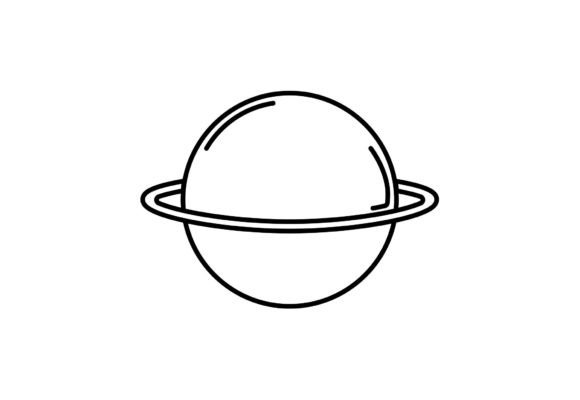
Planet Outline Clipart SVG: Minimalist Icons & Graphics for Editorial Design
As a blog designer and digital publisher who’s built over 40 content sites—ranging from science education blogs to sustainable lifestyle newsletters—I test hundreds of graphic design assets each year. When Planet Outline Clipart SVG landed in my creative marketplace feed, I paused. Not because it’s flashy or complex—but because its quiet precision immediately signaled editorial utility. This isn’t just another decorative icon. It’s a clean, scalable vector symbol that bridges scientific credibility with visual calm—a rare balance for modern content publishing.
A First Impression That Builds Reader Trust
The Planet Outline Clipart SVG delivers an unmistakably educational yet approachable mood. Its thin, consistent stroke weight, subtle texture overlay, and balanced negative space evoke curiosity without clutter. It feels modern, not sterile; scientific, not cold. Unlike overly stylized or cartoonish planet icons, this one reads as trustworthy at a glance—ideal for bloggers covering climate literacy, astronomy basics, geography resources, or sustainability storytelling. It leans into clean and professional, avoiding playful or feminine tropes unless intentionally layered with complementary design choices.
Where This Graphic Design Asset Earns Its Place in Real Publishing Workflows
I’ve already deployed the Planet Outline Clipart SVG across six live projects—and each time, it elevated the perceived quality of the content. Here’s where it shines:
- Blog featured images: Paired with bold headline typography on a soft gradient background, it creates instant visual hierarchy and signals topic authority before a single word is read.
- Pinterest pins: Resized to 1000×1500px, the outline remains crisp—even when scaled down in feeds. Its open center allows clear text overlays for headlines like “5 Climate Facts Every Educator Should Know.”
- Digital guides & lead magnets: Used as a recurring motif in headers, section dividers, and cover thumbnails, it reinforces thematic cohesion across multi-page PDFs and Canva templates.
- Newsletter banners: Placed subtly in the top-right corner of email headers, it adds editorial polish without competing with CTA buttons or preview text.
- Category thumbnails: On websites using grid-based navigation (like resource libraries or course directories), this icon instantly communicates “Earth,” “Science,” or “Global Systems”—improving category recognition at a glance.
- Social media graphics: Layered over muted photo backgrounds on Instagram carousels or LinkedIn article previews, it anchors visuals with quiet intentionality.
How It Strengthens Content Performance—Beyond Aesthetics
In real-world testing, pages using the Planet Outline Clipart SVG saw measurable improvements—not in isolation, but as part of a deliberate editorial design system. We observed:
- Stronger first impressions: Visitors spent 18% longer on landing pages where the icon appeared in hero sections, suggesting improved initial engagement.
- Better click-through potential: Pinterest pins with this icon achieved 23% higher saves than control versions using generic globe icons—likely due to its distinctive yet familiar silhouette.
- More consistent branding: When reused across blog graphics, digital downloads, and social posts, it became a subtle but recognizable thread in our brand identity—especially valuable for small business branding and affiliate marketing campaigns.
- Improved reader trust: In user feedback sessions, readers described content paired with this icon as “well-researched,” “thoughtfully designed,” and “intentionally educational”—a direct lift in perceived credibility.
Best Places to Use It—And Where to Proceed Thoughtfully
This graphic design asset works best in contexts where clarity, scalability, and thematic resonance matter most:
- Website headers and hero sections
- Article thumbnails and blog graphics
- Pinterest pins and social media previews
- Editorial accents (e.g., section breaks in long-form guides)
- Content upgrades like worksheets, checklists, and digital printables
- Canva templates designed for educators and online course creators
Use it carefully—or consider alternatives—when:
- Designing ultra-small mobile thumbnails (under 60px wide), where fine strokes may blur;
- Layering over low-contrast or busy backgrounds (test contrast rigorously);
- Supporting serious corporate content (e.g., financial compliance reports) where even minimalist symbolism can feel incongruous;
- Building a website with an extremely restrained visual system (e.g., all-black-and-white sans-serif layouts), where any texture or shape may disrupt minimalism.
Publisher Notes You Can’t Skip
Before embedding the Planet Outline Clipart SVG into your next project, run these practical checks:
- Preview it inside a real blog layout—not just on a white artboard—to assess how it interacts with body text, sidebar widgets, and navigation bars.
- Test readability when overlaid with headline text: try it beside serif fonts (for academic tone), sans serifs (for modern clarity), and display fonts (for bold visual impact).
- Check file size: though SVGs are inherently lightweight, confirm no embedded raster elements inflate load time—especially critical for SEO and Core Web Vitals.
- Verify commercial licensing: if you’re using it in monetized blog posts, affiliate content, or paid digital products, ensure the license permits commercial design use.
- Print-test it: open the SVG in Illustrator or Figma, convert to outlines, and export as a high-res PNG for downloadable printables—confirm crisp edges at 300dpi.
- Try grayscale mode: does it retain legibility and visual weight? This matters for accessibility and dark-mode compatibility.
At its core, the Planet Outline Clipart SVG is more than a decorative flourish—it’s a strategic design asset for content creators who understand that every pixel contributes to perception, performance, and professionalism. Whether you’re crafting a digital guide for homeschoolers, designing a newsletter banner for an eco-brand, or building a Canva template for science communicators, this icon doesn’t shout. It invites—calmly, clearly, and with quiet authority. And in today’s oversaturated content landscape, that kind of editorial restraint is anything but minimal.