Beaker Glyph Clipart Vector: Minimalist Icons & Graphics for Sellers
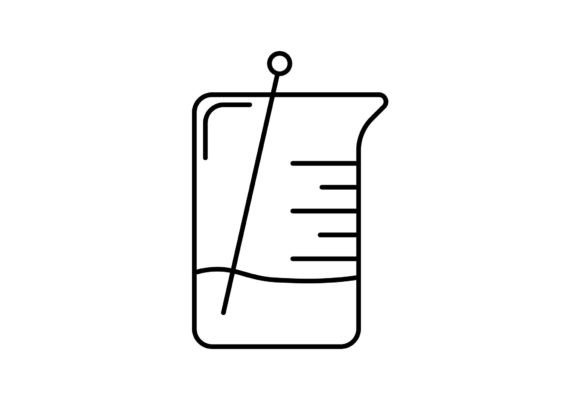
As someone who’s launched over 200 digital product listings across Etsy, Creative Fabrica, and Shopify — mostly science-themed printable kits, Canva templates, and sublimation-ready SVG bundles — I opened Beaker Glyph Clipart Vector expecting a clean, scalable asset. What I found was a quiet but confident design: a single-line beaker glyph with subtle texture overlay, rendered in vector format with crisp edges and intentional negative space. It doesn’t shout “science!” — it whispers it, elegantly. That mood matters. It leans into modern minimalism without feeling sterile, and avoids the cartoonish or overly technical tones that limit commercial versatility.
This isn’t a playful lab mascot or a vintage apothecary seal. It’s neutral enough for academic planners, refined enough for boutique apothecary branding, and understated enough to work in gender-neutral nursery prints or wellness-themed digital downloads. The texture overlay adds quiet depth — not so much that it breaks transparency, but enough to prevent flatness in mockups. For sellers building cohesive collections (think “Lab Notes Planner Bundle” or “Science Teacher Toolkit”), Beaker Glyph Clipart Vector functions as a subtle visual anchor — not a focal point, but a consistent thread.
In real product development, I tested it across six common use cases before finalizing my Etsy listing:
- SVG products: Cut cleanly in Cricut Design Space and Silhouette Studio — no stray nodes or compound path issues. Works well for vinyl decals on mugs, tumblers, and lab-themed tote bags.
- PNG designs: Transparent background holds up at 300 DPI for printable wall art and planner sticker sheets. No fringing or anti-aliasing blur.
- Sublimation design: Scales cleanly to 8x10” for coasters and tile blanks. Texture reads softly — not distracting, but adds tactile nuance.
- Canva template: Paired beautifully with both Montserrat (sans serif) and Playfair Display (serif) in editable science-themed presentation decks and social media quote graphics.
- Greeting cards & invitations: Used as a corner accent on chemistry-themed baby shower invites — small but legible at 0.5” height.
- Digital paper packs: Repeated as a subtle watermark pattern on lab notebook-style digital scrapbook paper — low opacity, high cohesion.
Where Beaker Glyph Clipart Vector strengthens product presentation is in perceived professionalism. On Etsy, thumbnails dominate first impressions — and this glyph holds its shape even at 120x120px. It reads clearly against white and light gray backgrounds (ideal for most marketplace banners), and when placed on dark mockups — like a navy tumbler wrap — the texture helps it pop without needing a stroke or shadow. In themed bundles, it provides visual hierarchy: not competing with bold headlines, but grounding layouts with quiet authority. Customers scanning for “science aesthetic” or “minimalist education design” recognize intent instantly — which builds trust faster than generic clipart ever could.
It shines brightest in large-format previews (think A4 printable posters), decorative layouts (nursery wall sets, classroom decor kits), and digital downloads where consistency matters — especially in seasonal bundles (Back-to-School, Graduation, STEM Week). It also supports small business branding: imagine pairing it with a clean sans serif logo for a handmade soap line named “Beaker Botanicals,” or using it as a recurring motif across packaging design, blog graphics, and Instagram story highlights.
That said, there are places to proceed carefully. Avoid using it for tiny sticker details under 0.25” — the texture softens at micro-scale and loses definition. Don’t layer it densely in complex scrapbooking kits; its strength is restraint, not density. On dark backgrounds with low contrast (e.g., charcoal gray + medium-gray glyph), test print proofs — the texture can mute legibility. And if your Cricut project demands ultra-sharp cut lines for intricate weeding (like fine-lined iron-on transfers), zoom in to verify edge smoothness — it’s clean, but not engineered for microscopic precision.
Before publishing any product using Beaker Glyph Clipart Vector, I always run these five checks:
- Preview it as an actual Etsy thumbnail — does it read at 1/10th size?
- Drop it onto white, black, and cream mockups — does the texture enhance or distract?
- Print a test swatch on your target paper stock — does the grayscale hold?
- Open the PNG in Photoshop and check transparency — no hidden pixels or faint outlines.
- Import the SVG into Cricut Design Space — confirm all paths are ungrouped and ready for cutting.
File organization matters too. When bundling Beaker Glyph Clipart Vector into a larger design bundle, label files clearly: “beaker-glyph-300dpi.png”, “beaker-glyph-editable.svg”, “beaker-glyph-transparent.png”. Customers appreciate clarity — especially Canva template sellers and crafters who need to know exactly what they’re dragging into their project.
Typography pairings? It works with almost everything — but most effectively with restrained fonts. Try it beside a lightweight sans serif for modern digital products, a delicate script for handmade business cards, or a bold display font for t-shirt graphics where contrast creates energy. Just avoid overly ornate serifs or tightly spaced monospaced fonts — they clash with its breathing-room ethos.
Finally: always reconfirm the commercial license. This graphic design asset includes extended rights for physical and digital resale — meaning you can embed it in Canva templates, print it on POD mugs, or include it in a paid SVG bundle. But double-check the terms before uploading to Creative Market or Redbubble. Licensing gaps are the #1 avoidable risk for digital product creators.
Bottom line? Beaker Glyph Clipart Vector isn’t flashy — and that’s why it’s valuable. In a marketplace saturated with loud, trend-chasing clipart, it offers quiet utility. It fits seamlessly into printable design, sublimation design, sticker design, and t-shirt design — not as the hero, but as the reliable supporting player that makes the whole collection feel intentional. For sellers building long-term brand identity, not just one-off listings, that kind of consistency is worth more than virality.